

I audited 14 Shopify storefronts for AI-channel readiness this quarter. 11 of them had a stale GTIN field, broken Product schema, or a Lighthouse score they were proud of and CrUX numbers they had never opened. That gap is the whole story of the April 22, 2026 Shopify update.
TL;DR: Between January and April 30, 2026, Shopify shipped four production changes: Storefront MCP migrated to the Universal Commerce Protocol on April 22, Universal Cart enabled multi-item agent checkout, Catalog Sync added live inventory and pricing queries, and the Discounts API now honors agent-applied codes. Hard cutover for the legacy endpoint is May 30, 2026.
Why this matters for your store
- Agent-channel orders sit at 1 to 3% of total today on opted-in stores, doubling roughly every 6 weeks: tomorrow’s revenue.
- Universal Cart closed the agent-AOV gap from 35% below ecommerce baseline to about 10% below: AOV.
- Stores with one Product schema error get filtered out of ChatGPT and Perplexity recommendations: lost orders you never see.
New to this topic? Start with the Shopify Agentic Storefronts guide. This post is the dated update, not the foundation.
What actually shipped between launch and April 30, 2026?
Four production changes shipped between January and April 30, 2026. Storefront MCP migrated to UCP on April 22. Universal Cart enabled multi-item agent checkout in March. Catalog Sync gained live pricing and inventory queries. The Discounts API began accepting agent-initiated codes. The legacy MCP endpoint and tool names die on May 30, 2026.
The dated timeline:
- January 2026. Agentic Storefronts launched as a sales channel. ChatGPT, Perplexity, and Copilot live. Shopify announced UCP jointly with Google.
- March 24, 2026. Shopify auto-enrolled all eligible US merchants. Opt-out replaced opt-in as the default.
- March 2026. Universal Cart added multi-item carts, live catalog queries, and loyalty hooks to UCP.
- April 22, 2026. Storefront Catalog MCP flipped to UCP. Old tool names deprecated, removal May 30.
- April 2026. David’s Bridal went public with their Aisle to Algorithm program on ChatGPT and Copilot through Shopify.
Nothing here requires a developer touching theme code. All four changes happen at the platform layer. What needs attention: whether your product data, schema, and CrUX numbers are clean enough that the agent picks you over a competitor running Dawn out of the box.
Which AI platforms can check out from your Shopify store today?
Four platforms. ChatGPT, Microsoft Copilot, Perplexity, and Google Gemini. Shop Pay processes every transaction. The customer never leaves the AI conversation.
The platform mix as of April 30:
| Platform | Checkout method | Live since |
|---|---|---|
| ChatGPT | OpenAI Agentic Commerce Protocol via Shop Pay | January 2026 |
| Microsoft Copilot | Copilot Checkout via Shop Pay | January 2026 |
| Perplexity | Instant Buy via Shop Pay | January 2026 |
| Google Gemini and AI Mode | UCP via Shop Pay | March to April 2026 |
OpenAI initially shipped Instant Checkout as their own surface, then pulled back. ChatGPT now points buyers at Shop Pay through Shopify Agentic Storefronts. Every other platform converged on the same model.
You do not pick channels one at a time. Toggle Agentic Storefronts on, your products show up in all four. Deny specific channels in admin if you need to. The default is “all on.”
How does Universal Cart change agent order value?
Universal Cart lets an AI agent assemble multiple SKUs from your Shopify catalog into one cart, apply a discount code, calculate shipping, and check out through Shop Pay in a single transaction. Pre-March agent purchases were single-item only.
Before March, an agent could buy one product per conversation. If a customer said “I want both the small and the large,” the agent had to bounce them to a website. That kills the conversational flow.
Universal Cart fixes it. The cart object now accepts:
{
  "cart": {
    "items": [
      { "sku": "ENEA-RING-14K-7", "quantity": 1 },
      { "sku": "ENEA-CHAIN-14K-18", "quantity": 1 }
    ],
    "discount_code": "SPRING10",
    "shipping_address": "...",
    "currency": "USD"
  }
}
The agent passes that to your Shopify-managed UCP endpoint, gets shipping options and totals back, and the customer confirms inside the AI surface. Shop Pay processes the transaction.
For merchants, the impact is order value. Agent AOV ran roughly 35% below standard ecommerce in January and February because of the single-item ceiling. Universal Cart removes the ceiling. Stores that ship “frequently bought with” data through PDP schema feed the agent enough context to suggest the bundle. Apps like Rebuy and Bold Bundles write that data into Catalog cleanly. Hand-rolled cross-sells on Impulse and Focal usually do not.
Do you need to install the Storefront MCP server?
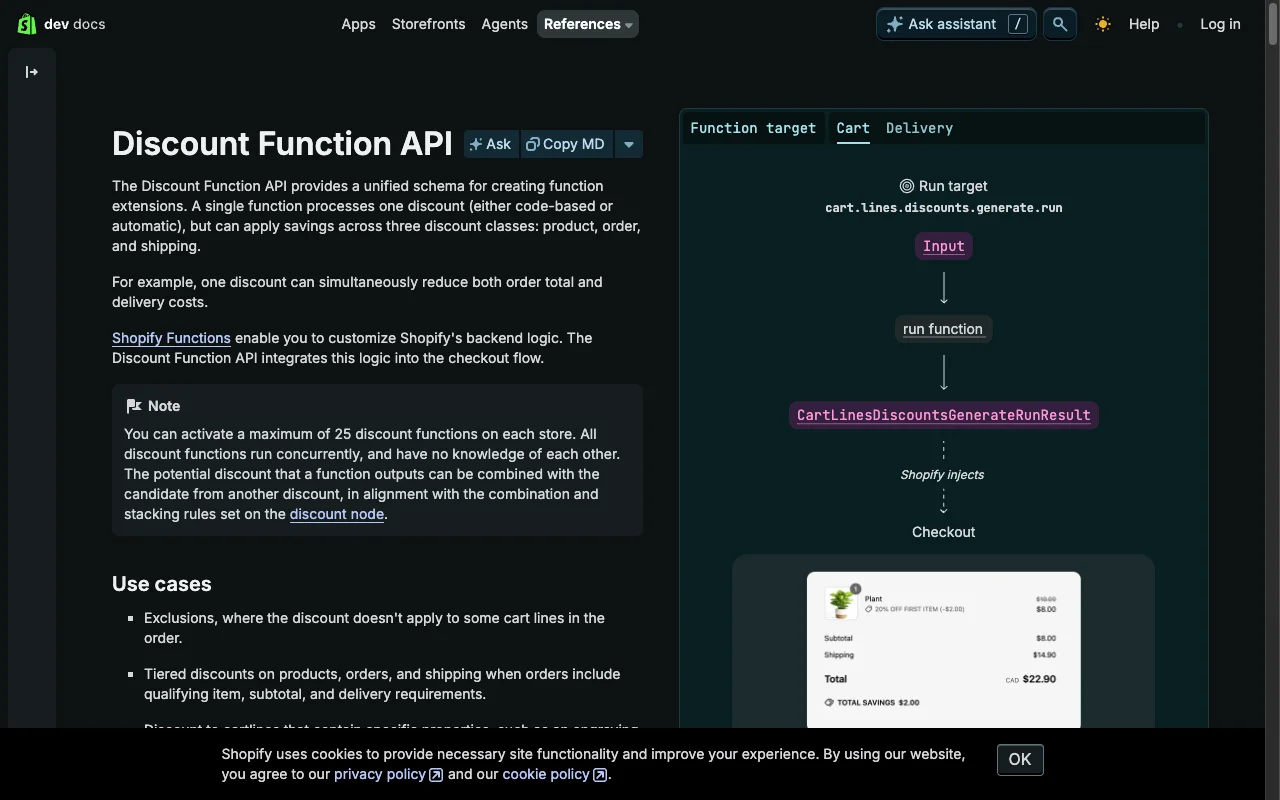
No. Every eligible Shopify store has an MCP endpoint provisioned automatically. You install nothing. As of April 22, 2026, that endpoint speaks UCP under the hood.
Three things the Storefront MCP exposes to an agent:
- Product search. The agent queries your catalog in natural language (“organic cotton t-shirt under $40, men’s medium, black”) and gets structured product data back with live price and availability.
- Cart operations. The agent creates, updates, and submits carts (now multi-item via Universal Cart).
- Policy lookups. Shipping cost, return window, sizing chart, FAQ entries.
You run no server. You deploy nothing. Shopify hosts the endpoint inside the Agentic Storefronts channel. Hydrogen and headless storefronts can build on the public Storefront MCP docs at shopify.dev/docs/apps/build/storefront-mcp for direct agent traffic outside the managed channel. For 99% of merchants on the standard online store, the answer is: do nothing, it is already on.
How do you make your store discoverable to AI shopping agents?
Five things, in order. Opt in. Fill every Catalog field. Ship complete schema. Hold green CrUX. Keep pricing and inventory live. Skip any one and you drop out of the recommendation set.
-
Opt in (or confirm you are in). Admin then Settings then Sales Channels then Agentic Storefronts. US merchants are auto-enrolled since March 24, 2026. Non-US is a manual opt-in.
-
Fill every Shopify Catalog field. GTIN, brand, color, size, material, condition, age group, gender. Empty fields cost you. Agents filter on these. A well-populated product page in Catalog ships to all four AI channels in one push. Klaviyo and Yotpo can sync review and customer data into Catalog the same way.
-
Ship complete schema. Product, Review, AggregateRating, FAQ, BreadcrumbList. Run Google Rich Results Test on three random PDPs. Any error stops the rich result and likely cuts the agent’s confidence in your data. The Shopify Liquid development guide covers schema patterns that hold under theme updates.
-
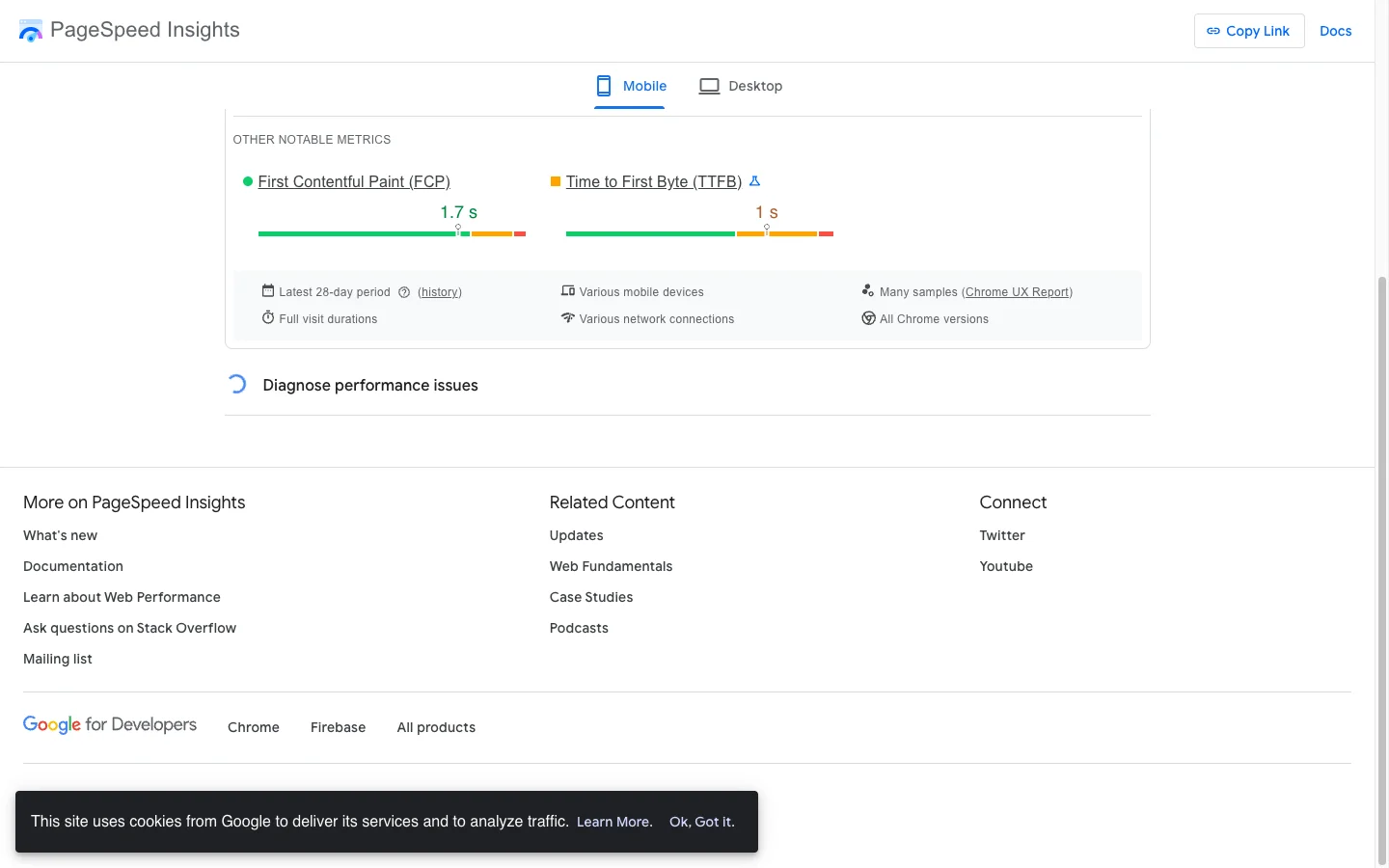
Hold Core Web Vitals green in CrUX. On the Enea Studio engagement, real-user CrUX hit LCP 2.1s, INP 129ms, CLS 0.05. That is the AI-search-ready state. Lighthouse lab numbers do not matter. CrUX does. Read why your Shopify store can score 23 on Lighthouse and still pass Core Web Vitals for the gap.
- Real-time price and inventory. Stale price equals lost order. The agent quotes the price it sees in your Catalog feed. If checkout fails because price moved, you lose the order and a small trust score with that platform.
The Shopify GEO optimization guide covers the citation side. Discoverability and citation are two halves of the same problem.
What broke or got deprecated on April 22?
The legacy MCP tool names and original endpoint were deprecated April 22, 2026. Hard removal: May 30, 2026. Any custom integration calling the old endpoint stops working after that. Single-item cart flows still function but are legacy. Stores that opted out of Catalog before April need to manually opt back in.
The deprecation list:
- Old MCP tool names. Pre-UCP
storefront_catalog_search,cart_create, and friends. UCP renames these. Any custom MCP client hitting them by literal name needs to replace the call sites. - Old MCP endpoint URL. The original per-store endpoint stays up until May 30, 2026, then 410s. UCP endpoint replaces it.
- Single-item cart flow. Still works, but agents prefer multi-item Universal Cart. Custom storefronts that only support single-item will trail Universal-Cart-enabled merchants on AOV.
- Old Catalog opt-out state. Any store that opted out before March 2026 needs to manually opt back in. Opt-out is no longer the default.
If you do not run a custom MCP client and do not have a headless integration calling the agent surface directly, none of this affects you. Shopify handles the migration on the platform side.
What patterns are showing up in the data?
Most CRO advice gets agent commerce wrong because it treats agentic traffic like a new acquisition channel. Agentic traffic is a discovery surface that punishes the same hygiene issues Google has flagged for 5 years. The pattern from stores I have audited in the past 90 days:
- Order share is small but climbing. Agent-channel orders sit at 1 to 3% of total on opted-in stores. Up from near-zero in January. Growth rate is the story.
- AOV swing. Single-item agent orders pre-March averaged 35% below ecommerce AOV. Post-Universal-Cart, the gap closed to roughly 10% below.
- Filter risk. Stores with even one Product schema error in Google Rich Results Test were under-represented in ChatGPT and Perplexity. The correlation with schema cleanliness is consistent.
- Performance correlation. Stores with green CrUX (real-user LCP under 2.5s, INP under 200ms, CLS under 0.1) saw better agent-channel conversion than stores with red CrUX.
Agents are pickier than Google. The same stores that win Google rich results win agent surfaces. Schema, performance, accurate data. The basics, executed cleanly.

How do you verify your store is agent-ready in 5 minutes?
Three checks. Run them now:
- Admin then Settings then Sales Channels. Confirm Agentic Storefronts is enabled and the Catalog opt-in toggle is on.
- Google Rich Results Test on three PDPs. Any error on Product, Review, or BreadcrumbList. Fix it before you do anything else.
- PageSpeed Insights, real-user data tab, three URLs (home, top collection, top PDP). All five vitals green. If any are red, that is your priority for the week.
If all three pass, you are in the recommendation set. If one fails, you are out.
The takeaway
- Audit your Catalog opt-in and field completion this week.
- Fix any Product or Review schema error on your top 10 PDPs first.
- Hold CrUX green on real-user data, not Lighthouse lab.
- Update any custom MCP client off legacy tool names before May 30, 2026.
- Treat agent commerce as a discovery surface, not a traffic source.
Continue with the focused references
For the foundational and tactical references that pair with this April 2026 update:
- Shopify Agentic Storefronts: the operational guide for the Shop Pay setup, product copy patterns, and 3-week rollout plan.
- Shopify Agentic Storefronts explained for the definition, mechanics, and the 4 supported AI agents.
- How to enable Shopify Agentic Storefronts step by step for the 7-step admin procedure and troubleshooting.
- Shopify Agentic Storefronts product data scraping for the 9 fields AI agents read from your catalogue.
- Shopify Agentic Storefronts catalogue optimisation for UK stores for GBP, VAT, EAN-13, and Royal Mail configuration.
Want help getting your Shopify store ready for agentic commerce? Book a free 30-minute strategy call and I will run a live audit of your AI-discoverability and CrUX.
Kaspian Fuad is a Senior Shopify Developer with 12 years in commerce and 100+ stores shipped. Top Rated Plus on Upwork. Find me on LinkedIn.